Short answer: Check CPGRAMS complaint status through the official portal using the grievance’s registration reference, then read the response and any attached action-taken document. A closed status records an administrative disposal; it does not by itself show that your underlying problem was solved. If dissatisfied, check the feedback and appeal options available for that case rather than creating repeated copies of the same complaint.
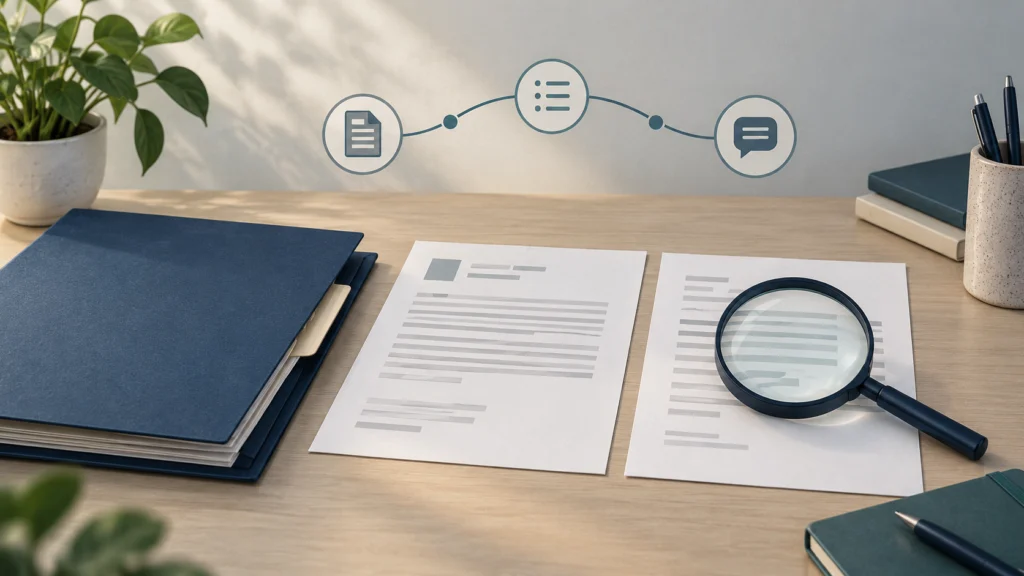
This guide is for people tracking a government service-delivery grievance. It explains how to organise the reply, evidence and next question. It does not decide whether you qualify for a benefit, replace a statutory appeal or promise that an officer will grant the outcome you request.
Start with the original grievance reference
The Department of Administrative Reforms and Public Grievances FAQ explains that a grievance receives a unique registration number and can be tracked through the portal’s status service. Locate the acknowledgement you received when the grievance was registered. Keep its reference separate from the application or service-request number that caused the complaint.
Those two references answer different questions. A scheme-application number identifies the underlying service request, while the grievance reference identifies your complaint about how that request was handled. When corresponding with an office, include enough context to connect them without assuming they are the same record.
Make a small case note containing the grievance reference, original submission date, responsible organisation as shown and the particular service problem. Add a link or filename for your original complaint. This is more useful than reconstructing your account from memory whenever a new message arrives.
If another person helped you submit the grievance, ask for the acknowledgement and a copy of what was actually sent. Establish which contact details were used and how you can access the response legitimately. Do not share credentials or authentication codes with an unsolicited caller offering to accelerate the case.
Read CPGRAMS complaint status on the official service
Open the official CPGRAMS status page and complete the fields currently displayed, including the registration reference and security check. This article has inspected the public interface only; it has not accessed an individual’s grievance. A missing result should first prompt a check of the reference, service and information entered.
Keep the exact wording of the status with the date you viewed it. Distinguish that observation from your interpretation. “The portal shows this status today” is a verifiable note; “the department has accepted everything I said” may be an inference that the record does not support.
Read any displayed organisation, movement history and response together. If a grievance has moved between offices, do not assume that each movement represents a new decision about the merits. Look for the actual reply and which office has responsibility for the action being described.
A screenshot can help preserve a point-in-time record, but it should include enough surrounding context to identify the correct case. Store it privately. If you need to ask someone for help, redact unrelated personal information rather than publicly posting a full grievance containing identity, family or financial details.
Read the action-taken reply before choosing a next step
DARPG’s 23 August 2024 comprehensive guidelines discuss reasoned disposal, action-taken reporting and supporting documents. Use the actual explanation in your case as the starting point for review. A short status label cannot replace reading a letter or order attached to the reply.
Compare the response with the request you originally made. Identify whether the office supplied information, requested a document, described an action, rejected the request with reasons or referred to a separate process. More than one of these can appear in the same reply.
| Part of the reply | What to check | Useful next question |
|---|---|---|
| Service action | What action is described? | Can I identify it in my own service record? |
| Reason | Which rule or factual issue is relied on? | Does it address the problem I raised? |
| Attachment | Is the cited letter or order available? | Do I need a readable copy? |
| Further information | What specific document is requested? | Which legitimate channel should receive it? |
| Unresolved point | What remains unanswered? | Can I state that gap in one clear paragraph? |
This worksheet is an original reading aid, not a government form or a legal test of whether a disposal is valid. Keep your original request alongside it. A focused disagreement with a specific part of the reply is easier to understand than simply repeating the entire history without addressing the reason given.
Check the underlying service record too. For example, our PM-KISAN status and verification guide explains a separate set of application and payment checks. A grievance-status change is not a replacement for checking the relevant scheme record or its eligibility conditions.
Understand the difference between a target and your deadline
The official FAQ states a 21-day redress period and calls for an interim explanation when delayed. The 2024 guidelines also discuss longer cases and interim replies. Treat this as grievance-handling guidance, not a guarantee that every underlying service, payment or disputed entitlement will be completed within that period.
The FAQ separately says that an applicant’s appeal must be filed within 30 days for the described Central Ministry or Department appeal provision. Read the disposal date, current case prompts and applicable instructions promptly. Do not wait for an informal conversation to finish before checking a time limit that may affect your next step.
A processing period and a period for you to act are different. The guidelines’ discussion of appeal disposal should not be mistaken for extra time to lodge your own appeal. If the starting date or applicable route is unclear, seek clarification through the responsible official channel or qualified advice.
No personal filing date is calculated here, and no deadline entry has been created or published. Cases can involve other procedures with their own conditions. Preserve notices and orders separately; a CPGRAMS grievance does not establish that a statutory limitation period has stopped running.
Prepare focused feedback or an appeal when available
The FAQ describes a feedback-linked appeal provision for dissatisfied grievances concerning Central Ministries or Departments. Availability depends on the case and workflow. The guidelines also identify categories outside the normal feedback process, so the absence of an expected button should not be resolved by assuming every grievance has identical appeal options.
When an appeal route is available, explain what the disposal failed to address. Refer to the original issue, the particular response and the evidence that supports your objection. Keep a request for review distinct from a new and unrelated service problem.
A concise structure is useful: identify the grievance, summarise the response accurately, describe the unresolved point and state the review or clarification requested. Use neutral language and document references. Avoid alleging deliberate misconduct merely because a reply is unhelpful or a record remains unclear.
Keep the acknowledgement and appeal reference when an appeal is submitted. The portal has a separate appeal-status page; use the reference and fields that page asks for rather than silently substituting the original service-application number. Store appeal and grievance records together while keeping their identities clear.
Do not repeatedly submit duplicate appeals or fresh grievances in an attempt to force movement. The guidelines call for a single appeal for a grievance. Follow the applicable official instructions for a genuinely new matter or a case that cannot use the normal feedback route.
An illustrative review of an unsatisfactory reply
Imagine a person complaining about an unanswered government service request. The grievance later shows a closed status and a reply referring to an earlier letter. The person has not received that letter and initially believes that closure means there is no further question they can ask.
A more useful review separates two issues. First, what did the reply actually decide or explain? Second, can the person obtain and read the document it relies on? The person notes the missing document, preserves the disposal record and checks the available feedback or appeal route and its timing.
A focused explanation might say that the cited letter is unavailable and that the stated service question therefore remains unanswered. It would identify the relevant references and request a readable copy or review, rather than invent what the letter must contain. The eventual outcome remains open.
This is a hypothetical example, not a successful case study or an allegation about a real department. It illustrates how an evidence-based response can be clearer than a complaint that simply says “nothing happened” without explaining the gap.
Use the correct route for the actual problem
The FAQ excludes matters such as RTI requests, court-related issues and personal or family disputes from its described grievance-redress scope. A grievance portal is not a substitute for every legal or administrative process. Check the responsible authority and current instructions before assuming that one registration covers every remedy.
A private purchase dispute also needs its own route. Our National Consumer Helpline complaint guide concerns consumer complaints and evidence. It should not be read as interchangeable with tracking a government service-delivery grievance on CPGRAMS.
If a technical error stops access to your case, record the public error text and time without exposing private details. Use the official portal’s help route. A browser problem does not prove that your grievance was rejected, and a paid intermediary cannot be assumed to have special authority over the decision.
Frequently asked questions
Does closed status prove I received the requested benefit?
No. Read the disposal and check the underlying service record. Administrative closure and your requested outcome are different observations.
Is the grievance number the same as an appeal number?
Keep each acknowledgement and use the reference required by the relevant official status service.
Should I submit a second copy before reading the reply?
Read the existing record first. Check the applicable feedback, appeal or other official route instead of creating avoidable duplicates.
Final CPGRAMS complaint status checklist
Find the acknowledgement, check CPGRAMS complaint status through the official page, read the complete reply and attachments, identify the unresolved point and check the correct next route promptly. Preserve a clear record of what the system actually shows and what you still need answered.
Author: Ajit Naskar. Publication date: 15 October 2026. Updated and last verified: 15 October 2026. Correction history: Initial version; no published corrections. General service-navigation information, not legal advice or a guarantee of grievance resolution. Case-specific eligibility and procedural deadlines need individual checking. No affiliate links or government affiliation. Evergreen guide; no new rule announced.
Leave a Reply